

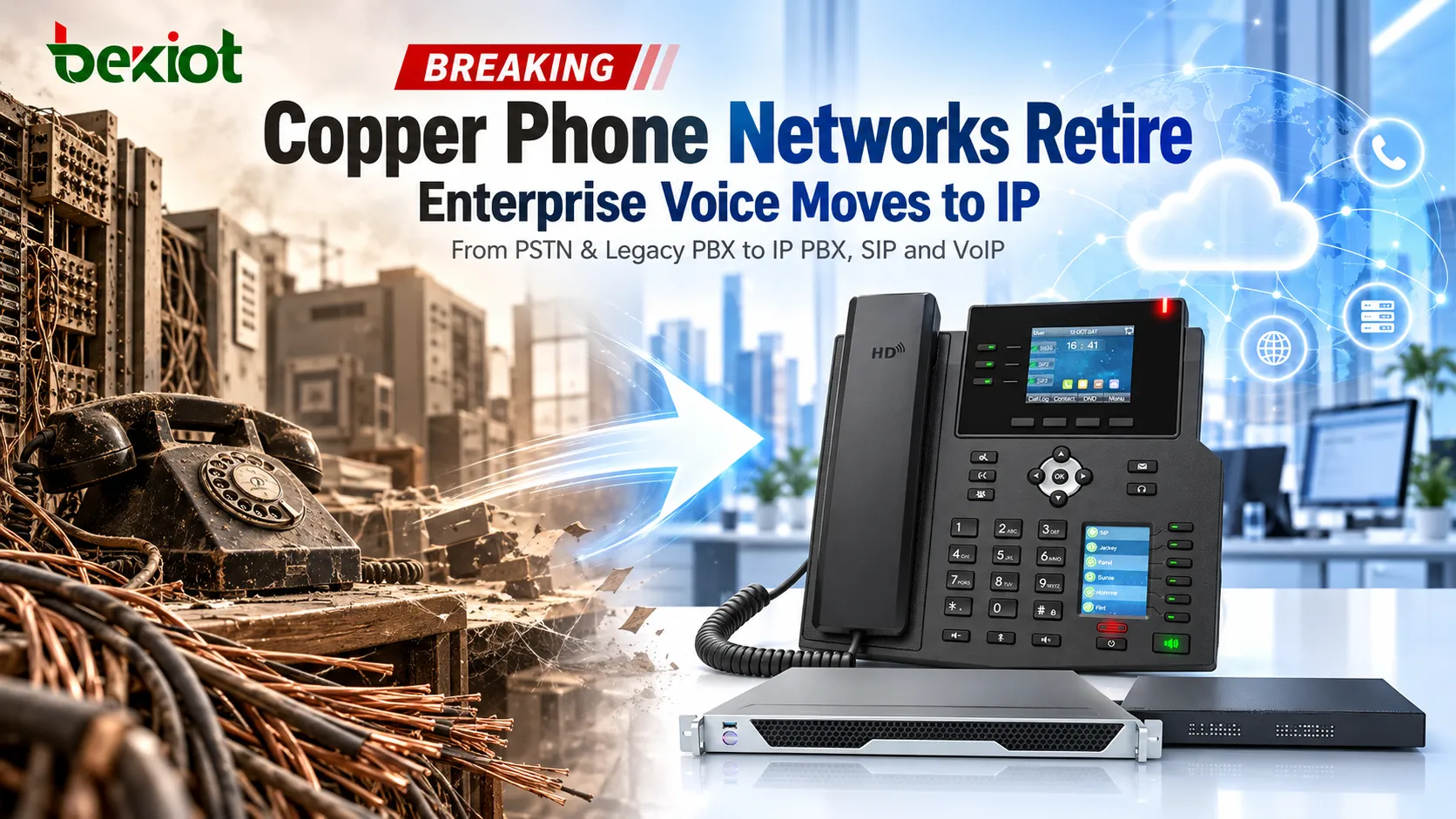
The retirement of copper telephone lines that have been in service for decades is now driving a new wave of VoIP transformation.
In 2026, copper retirement accelerated across New Jersey. The announced plan covers 62 wire centers, with implementation scheduled for December 10, 2026 or later. At the same time, a local VoIP provider released updated 2026 cloud-phone pricing, with three service tiers starting at $19.99 per month, bringing the question of how businesses should migrate away from copper lines directly into the commercial market.
The pricing itself is not the most important part of this development. The larger change is architectural. Business voice services have traditionally depended on carrier copper lines, analog trunks and on-premises PBXs. As legacy telephone infrastructure is gradually retired, more organizations are being pushed to redesign the way their voice communications are delivered.
In March 2026, the FCC also introduced further changes to network-modernization rules, giving carriers more room to accelerate the transition away from traditional copper infrastructure. For enterprise IT teams, the question of whether to continue relying on copper telephone service is increasingly becoming an immediate migration issue rather than a long-term planning discussion.
Voice Is Moving from a Line-Based Service to an IP Service
One of the defining characteristics of traditional PSTN service is the clear physical relationship between a telephone number, a line and the voice path. A copper pair enters the business premises and connects to a PBX, analog telephone or another endpoint, creating a relatively fixed communications path.
VoIP changes that relationship. Voice is digitized and encapsulated as IP traffic, transported over Ethernet, broadband or private IP networks, and then managed by an IP PBX, SIP platform or cloud-based call-control system for numbering, extensions and call routing.
This means that expanding the phone system no longer necessarily requires adding another physical telephone line. A business number also does not need to remain tied to a single desk phone. IP phones, PC softphones, mobile apps, branch-office endpoints and remote employees can all participate in the same SIP-based calling environment.
From a technical perspective, copper retirement is pushing enterprise voice from a line-driven model to a network-driven model. The planning questions are shifting from “How many outside lines do we need?” toward bandwidth, SIP concurrency, QoS, call routing and endpoint registration.
Enterprise Phone Systems Are Moving from PBX Hardware to Networks and Software
In the copper era, expanding an enterprise phone system often meant adding analog trunk cards, digital extension boards or replacing the PBX with a larger hardware platform. System capacity was closely tied to physical slots and line counts.
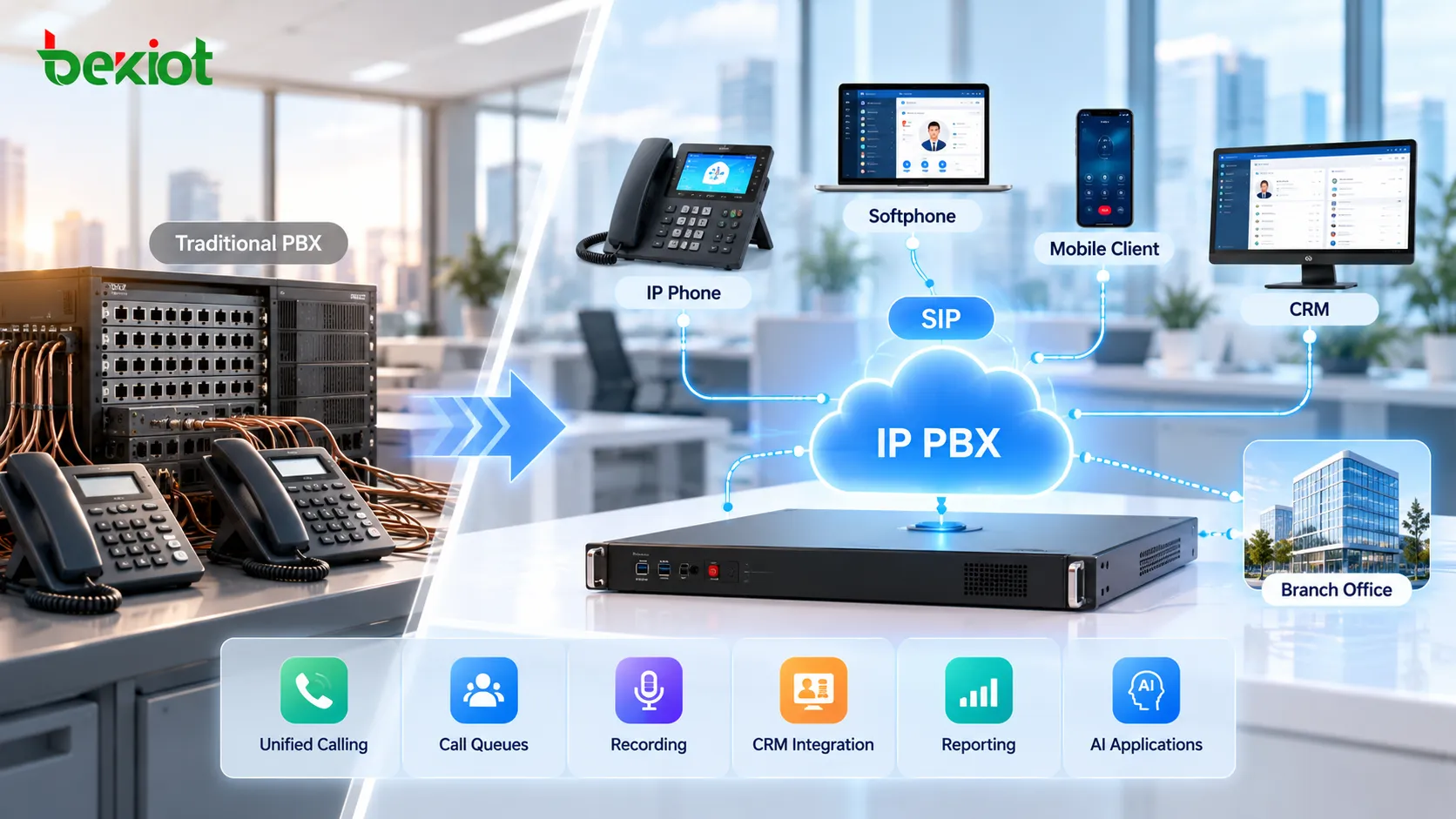
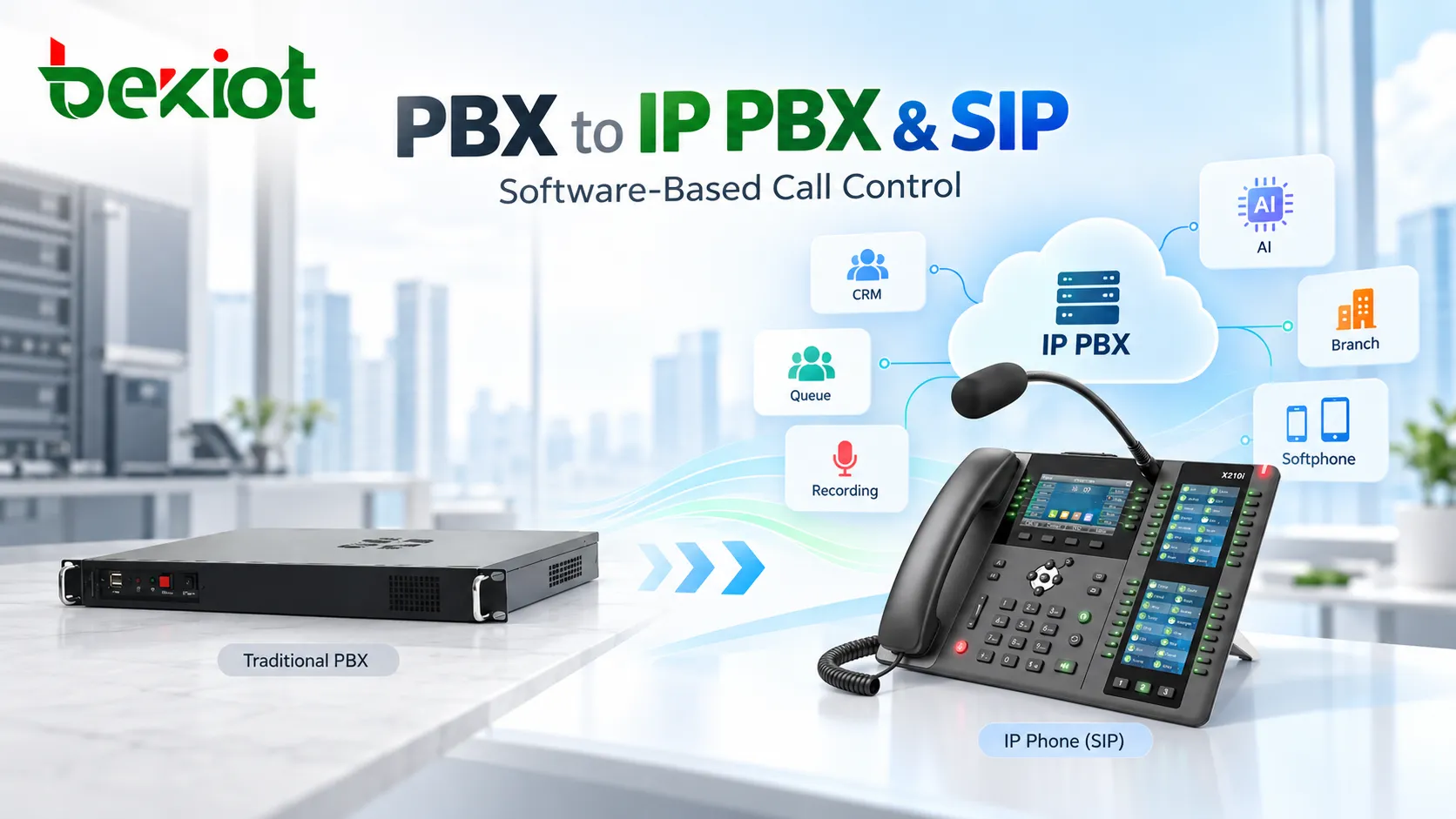
With IP-based communications, the center of the phone system increasingly shifts toward software-defined call control. The IP PBX manages extensions, numbers and routing, SIP establishes sessions between endpoints and trunks, and the network carries the voice traffic.
This creates another important change: business telephony can now connect more directly with enterprise software.
CRM platforms can display customer records when a call arrives. Call queues can distribute calls according to department, time or agent status. Recordings can be stored centrally. Branch offices can share the same numbering plan. AI applications can also participate in transcription, call summaries, automated answering and call routing.
The 2026 service plans launched by the New Jersey VoIP provider illustrate this shift. Entry-level services focus on replacing traditional business telephony, while higher tiers add call queues, recording, CRM integration, reporting, AI reception and call-summary capabilities.
This shows how market competition is moving from “who can provide the phone line” to “who can deliver a complete IP voice capability.” The telephone is no longer just a device on a desk; it is increasingly becoming one endpoint within a broader digital communications platform.
The Real Migration Challenge Comes from the Technology Behind the Phone Line
If a business looks only at employee desk phones, copper migration can appear relatively straightforward. Replace the phones with IP endpoints, port the numbers and configure a SIP Trunk, and the primary office voice service can be moved to IP.
The real complexity often lies behind the copper lines themselves. Fax machines, alarm dialers, elevator phones, door-entry intercoms, emergency phones, some payment terminals and fixed industrial telephones may still depend on analog interfaces.
These devices cannot simply be moved according to a “plug in an Ethernet cable and migrate” model. Some depend on analog line voltage, ringing, DTMF or specific dialing behavior. Fax services may require T.38 or G.711 compatibility, while alarm and elevator communications may have stricter emergency-service requirements.
Copper retirement therefore does not mean that every analog endpoint must be replaced at once. Devices that still provide operational value can often be connected to a new SIP environment through an ATA, FXS Gateway or IAD, allowing the core switching and trunk infrastructure to move to IP while selected analog endpoints remain in service.
Compatibility is the issue that needs to be addressed first. Businesses should identify what every analog line is connected to, what function it performs and whether it supports any safety-related service before deciding whether to replace the endpoint or retain it through a gateway.
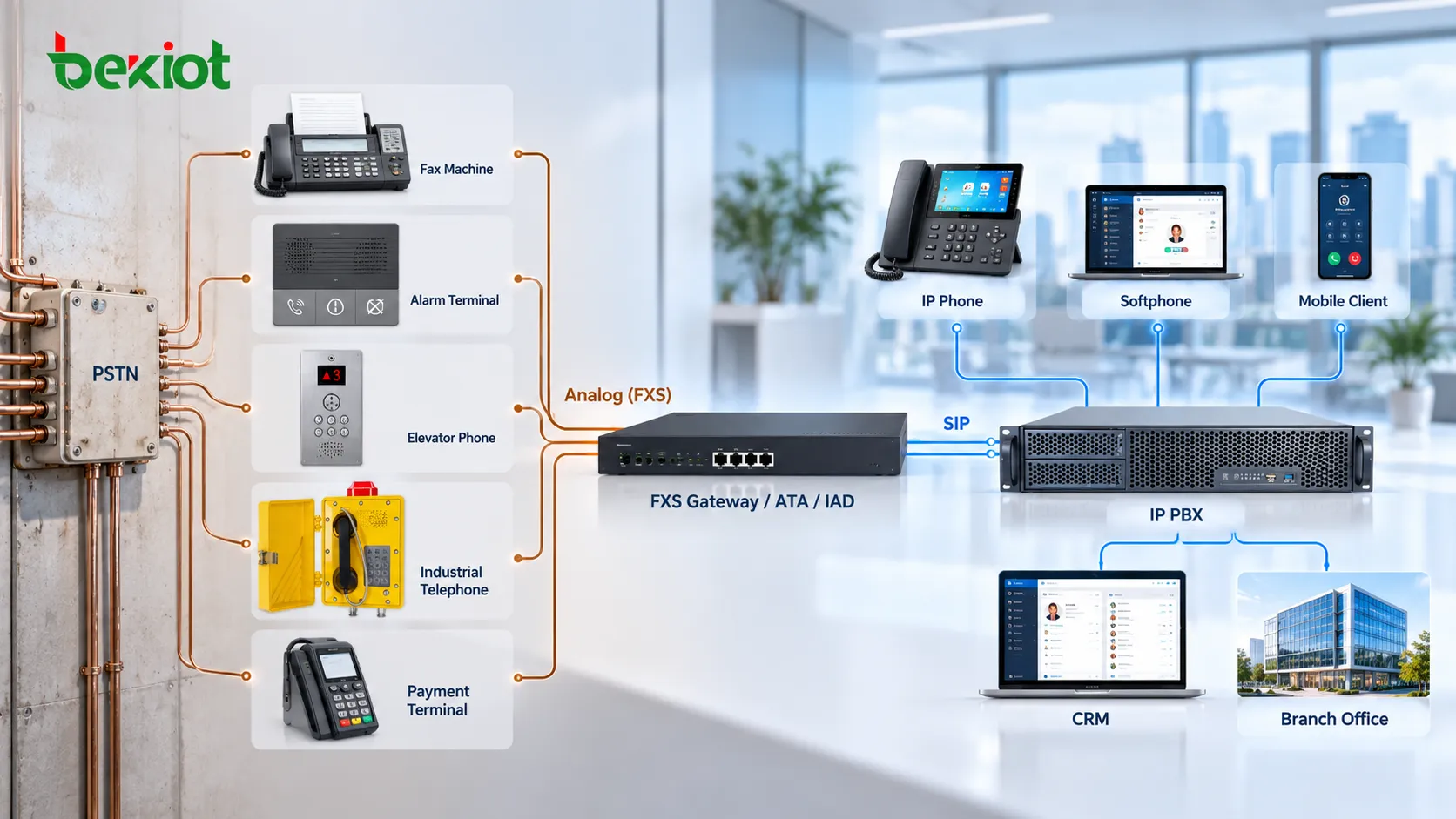
For organizations still operating traditional PBXs, a more practical approach is not to replace every telephone immediately after receiving a retirement notice. The first step is to build a complete voice-communications inventory: who uses each external number, which numbers must be retained, which endpoints are analog, which lines support alarm or emergency functions, and which devices can move directly to SIP.
From there, number porting, SIP Trunk migration, IP PBX configuration, analog-device integration and changes in employee calling workflows can be completed in stages. This reduces the need for a large one-time replacement while also preventing an overlooked fax, alarm or emergency line from suddenly going offline after copper service is discontinued.
In future enterprise phone-system planning, the first question may no longer be “How many lines will the carrier provide?” Instead, businesses will need to ask, “Which business processes require voice, and which IP network and endpoints should carry those communications?”
What copper retirement is really bringing to an end is not the telephone itself, but the era in which a telephone service had to depend on a dedicated copper pair.
Becke Telcom provides mature enterprise voice-migration solutions together with PBX, SBC and IAD architectures for organizations transitioning from legacy telephony to IP-based communications.
FAQ
Do All Traditional Desk Phones Need to Be Replaced When Copper Lines Are Retired?
Not necessarily. Some conventional analog phones can continue operating through an ATA, FXS Gateway or IAD connected to a VoIP or IP PBX system. Whether an endpoint should be retained or replaced depends on its condition, interface requirements, maintenance cost and required business functions.
What Should a Business Check First When Migrating from PSTN to VoIP?
The first step is to create a complete inventory of telephone lines and connected equipment, including main numbers, extensions, fax machines, alarm systems, elevator phones, access-control intercoms, emergency phones and other analog devices. The business can then determine which endpoints should migrate directly to IP and which require a gateway during the transition.
Does a VoIP Migration Only Require Buying IP Phones?
No. A complete migration can also involve SIP Trunks, IP PBX platforms, network quality, number porting, call routing, analog-device compatibility and integration with existing business applications. Multi-site deployments or SIP access over public networks may also require consideration of SBCs, security policies and failure-recovery design.